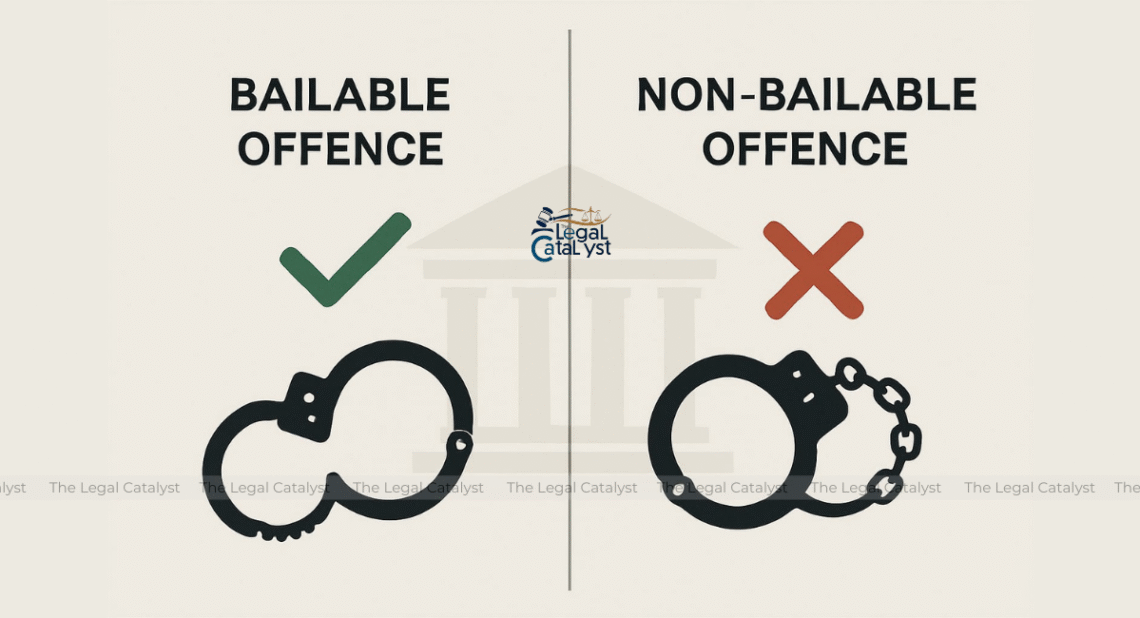
In criminal law, offences are broadly categorized into two types: bailable and non-bailable. These terms are defined under the Code of Criminal Procedure (CrPC), and understanding the distinction between them is crucial for anyone navigating the legal system, whether as a student, professional, or citizen. The key difference lies in whether the accused person has the right to be released on bail or whether it lies within the discretion of the court.
What is a Bailable Offence?
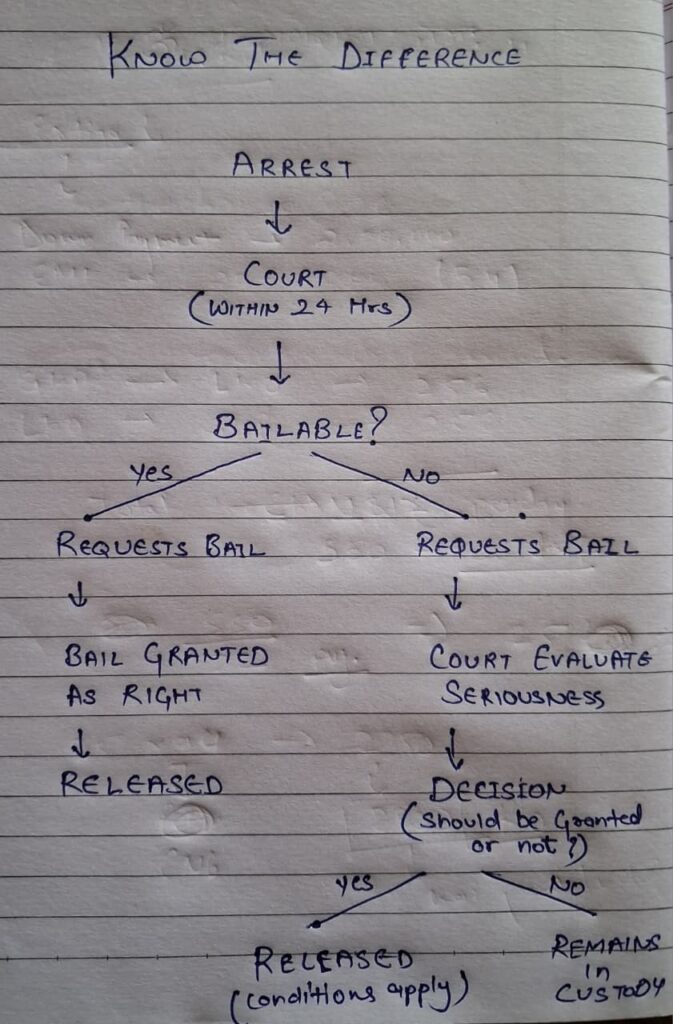
A bailable offence is one in which the accused has a legal right to be released on bail. This means that once the accused applies for bail, the police officer or the court is bound to grant it. These offences are generally considered less severe in nature, with lighter punishments.
Examples of bailable offences include:
- Simple hurt
- Public nuisance
- Minor theft cases
- Defamation
In such cases, since the nature of the offence is not grave, the law presumes it safe to grant bail as a matter of right.
Also Read- What is a Zero FIR?
What is a Non-Bailable Offence?
A non-bailable offence, as the name suggests, does not guarantee the accused an automatic right to bail. Instead, the decision rests with the discretion of the court, which will evaluate the seriousness of the offence, the possibility of tampering with evidence, the likelihood of flight, and the interest of justice before granting bail. These offences typically involve graver acts that pose a higher risk to society.
Examples of non-bailable offences include:
- Murder
- Rape
- Kidnapping
- Dowry death
- Human trafficking
Since these crimes are serious and punishable with strict penalties, the courts exercise greater caution in deciding whether to release an accused on bail.
Key Differences Between Bailable and Non-Bailable Offences
- Right to Bail: In bailable offences, bail is a right; in non-bailable offences, it is a privilege that may or may not be granted.
- Authority to Grant Bail: In bailable offences, both the police and the court can grant bail. In non-bailable offences, only the court has the authority.
- Severity of Offence: Bailable offences involve less serious crimes, while non-bailable offences deal with grave and heinous acts.
- Discretion of Court: In bailable offences, the court has no discretion once bail is sought. In non-bailable offences, the court assesses several factors before deciding.
Why This Distinction Matters
This classification is important. It balances two critical aspects of criminal justice. The first is protecting the rights of individuals accused of minor offences. The second is ensuring greater safeguards against those charged with serious crimes. For an accused person, knowing whether an offence is bailable is crucial. It can significantly affect their understanding of their legal rights and the process ahead.
Also Read- Understanding the Legal Status of Cryptocurrency in India in 2025
Conclusion
Recognizing the distinction between bailable and non-bailable offences is crucial in the legal sphere. While a bailable offence grants the accused the right to bail, a non-bailable offence necessitates court approval for release. This differentiation highlights the severity of the offense, emphasizing the need for a clear understanding among legal professionals and the community. Such comprehension is essential for upholding fairness and transparency within the legal framework.
Connect with us on Instagram – X – LinkedIn for daily updates, quizzes, and other materials.