New Delhi, 29 January 2026:
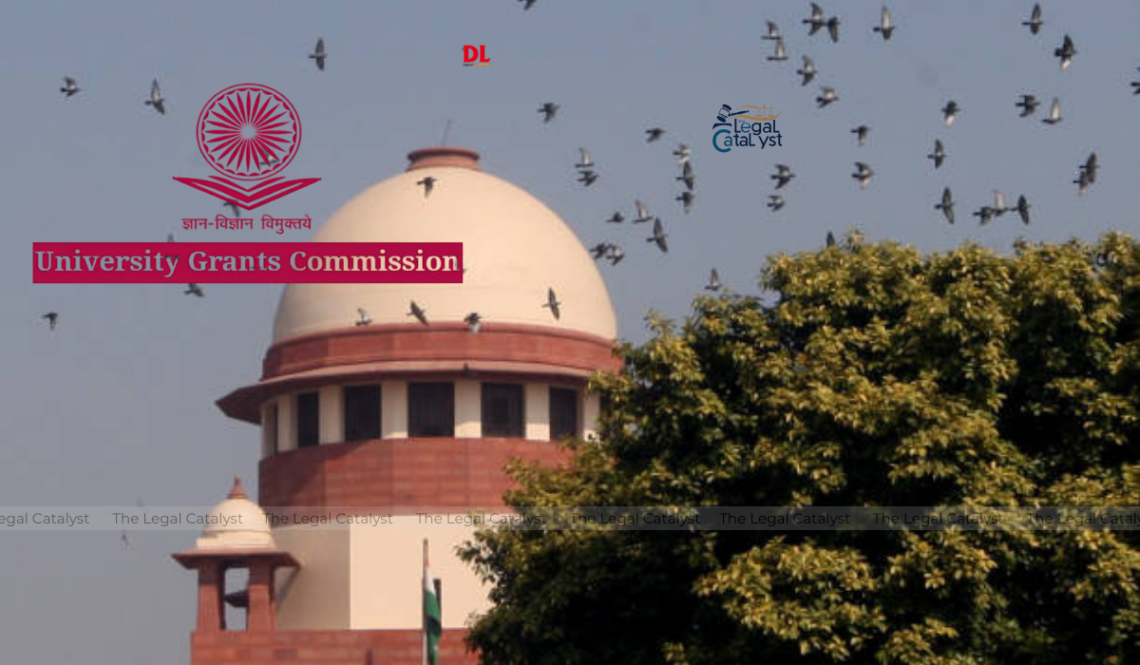
In a significant development, the Supreme Court of India on Thursday stayed the implementation of the recently notified UGC, University Grants Commission (Promotion of Equity in Higher Education Institutions) Regulations, 2026, observing that the new regulatory framework raises serious legal and societal concerns.
A bench led by Chief Justice of India Surya Kant along with Justice Joymalya Bagchi directed that the 2012 UGC equity regulations shall continue to operate until further orders. The Court also issued notice to the University Grants Commission (UGC) and the Central Government, and has listed the matter for further hearing on 19 March 2026.
The 2026 regulations, notified on 13 January 2026, sought to overhaul the institutional mechanism to address caste-based discrimination in higher education institutions nationwide. However, the petitioners challenged the legality of key provisions on constitutional grounds, principally arguing that the grievance redressal scheme excludes “general category” students from lodging complaints under the new framework, thereby creating an unequal and discriminatory regime.
During the hearing, the bench observed that the definition of “caste-based discrimination” in Section 3(c) of the 2026 Regulations — limited to discrimination against Scheduled Castes (SC), Scheduled Tribes (ST), and Other Backward Classes (OBC) — was at odds with the broader conception of discrimination under Section 3(e), which encompasses caste and other enumerated grounds without excluding any category. The Court described the language of the regulations as vague and potentially open to misuse, underscoring the need for expert examination and linguistic clarification.
Explore- UGC’s New Anti-Discrimination Rules: What Changed, What Didn’t, and Why the Debate Matters
The top court warned that if the new regulations were allowed to operate in their present form without judicial scrutiny, they could have a “dangerous impact” and contribute to societal division.
Meanwhile, the Court emphasized that victims of discrimination must not be left without remedy during the transition period, hence the interim continuation of the 2012 regulatory regime.
The petitions have been tagged with pending matters relating to caste discrimination and equity mechanisms, indicating a broader judicial review of how anti-discrimination policies are structured within the higher education landscape.
Connect with us on Instagram – X – LinkedIn for daily updates, quizzes, and other materials