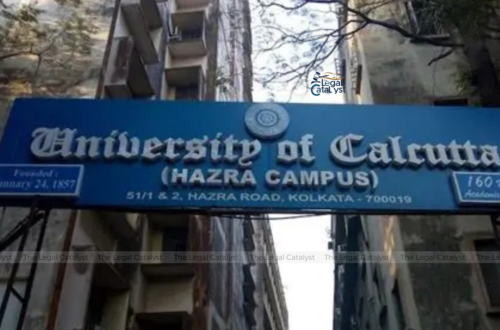

- Introduction and Institutional Identity
- Foundational Objective and Institutional Evolution
- Location-Based Academic and Career Exposure
- Courses Offered and Entry Pathways
- Academic Structure and Teaching Reality
- Academic Rigor and Evaluation Standards
- Fee Structure and True Cost of Education
- Internship Ecosystem and Practical Exposure
- Moot Court, Research, and Co-Curricular Opportunities
- Placements and Career Outcomes
- Alumni Network and Long-Term Value
- Campus Culture and Student Experience
- Administration and Institutional Governance
- Multi-Campus or Branch Structure
- Suitability Analysis
- Who Should Avoid This University
- Comparative Positioning
- Final Verdict
Introduction and Institutional Identity
The Faculty of Law, University of Allahabad, is a constituent faculty of the University of Allahabad, one of India’s oldest modern universities, established in 1887. Legal education has been offered at Allahabad for over a century, positioning the faculty as a legacy public law institution rather than an autonomous or reform-driven law school.
The Faculty of Law is located in Prayagraj, Uttar Pradesh. The university is a central university recognised by the University Grants Commission, and the law programmes are approved by the Bar Council of India, enabling graduates to enrol as advocates.
As a Non-NLU law institution, the Faculty of Law, University of Allahabad, operates within a traditional public university framework marked by large batches, low fees, and limited institutional career support. Any evaluation must therefore focus on academic delivery, exposure, and average student outcomes rather than institutional branding.
Foundational Objective and Institutional Evolution
The University of Allahabad was established during the colonial period with the objective of creating a centre for higher learning in northern India. Legal education formed an early and important part of this vision, aimed at producing lawyers, judges, and administrators for courts and public institutions.
The Faculty of Law initially focused on doctrinal teaching in substantive and procedural law, closely aligned with court practice. Over time, postgraduate and doctoral programmes were added, and the five-year integrated LL.B. programme was introduced much later in response to national shifts in legal education. Unlike National Law Universities, which were designed as structurally reformist institutions with residential campuses, continuous evaluation, and integrated skills training, Allahabad’s law programmes evolved incrementally. The result is a curriculum that is comprehensive on paper but conservative in pedagogy and institutional design.
Explore- Faculty of Law, Banaras Hindu University (BHU), Varanasi, Uttar Pradesh
Location-Based Academic and Career Exposure
Prayagraj occupies a unique position in India’s legal geography due to the presence of the Allahabad High Court.
Advantages
The Allahabad High Court is one of the largest and most influential High Courts in the country. Its presence provides substantial exposure to constitutional litigation, civil and criminal appeals, and writ practice. District courts and tribunals further strengthen litigation access. Students interested in courtroom practice, judicial services, and constitutional law benefit directly from the city’s legal ecosystem.
Limitations
Prayagraj has negligible corporate legal presence. There are no major law firms, in-house legal teams, or policy institutions in the city. Internships with corporate firms, arbitration centres, or regulatory bodies generally require travel to Delhi, Mumbai, or other metros. Semester-time corporate exposure is therefore unrealistic for most students.
Courses Offered and Entry Pathways
| Programme | Duration | Entry Pathway |
|---|---|---|
| B.A. LL.B. (Hons.) | 5 years | CUET-UG |
| LL.B. | 3 years | CUET-PG |
| LL.M. | 2 years | CUET-PG |
| Ph.D. (Law) | Variable | University-level admission process |
Admissions are centralised through CUET, reducing discretionary selection. Batch sizes are large, leading to a wide range of academic preparedness and motivation among students.
Academic Structure and Teaching Reality
Teaching at the Faculty of Law is predominantly lecture-based. Class sizes are substantial, particularly in the three-year LL.B. programme. Faculty composition includes senior professors with strong doctrinal grounding, supported by associate and assistant professors and occasional contractual faculty.
Classroom seriousness varies by course and instructor. Some subjects are taught with depth and case law focus, while others remain basic and exam-oriented. Skills-based teaching, simulations, and clinical integration are limited. Students seeking professional competence must rely heavily on self-study and internships.
Academic Rigor and Evaluation Standards
Attendance requirements exist formally, but enforcement is inconsistent. Internal assessments usually include written tests or assignments, though their academic rigor varies.
End-semester examinations carry the highest weight. The grading culture is conservative, with limited grade inflation. High distinctions are uncommon, and most students cluster in average grade ranges. Feedback mechanisms are minimal, and academic improvement depends largely on individual effort.
Fee Structure and True Cost of Education
| Cost Component | Approximate Amount (INR) |
|---|---|
| Annual Tuition Fees | 3,000–8,000 |
| Hostel and Living (Annual) | 60,000–1,20,000 |
| Estimated Total Course Cost (5 years) | 3–4.5 lakhs |
| Estimated Total Course Cost (3 years) | 2–2.5 lakhs |
The Faculty of Law, University of Allahabad, is among the most affordable law education options in India. However, low fees also correlate with limited investment in infrastructure, technology, and student services.
Internship Ecosystem and Practical Exposure
Internships are largely student-driven. Many students intern with advocates practicing at the Allahabad High Court or district courts, offering meaningful exposure to litigation and appellate practice. Semester-time court internships are feasible due to proximity.
Corporate or policy internships are uncommon and usually pursued during vacations in other cities. Clinical legal education exists formally but lacks scale and consistent supervision.
Moot Court, Research, and Co-Curricular Opportunities
Moot court activities exist but are not central to institutional culture. Participation depends on student initiatives rather than structured faculty mentoring. ADR exposure remains largely theoretical.
Research opportunities are stronger at the postgraduate level. Undergraduate research mentoring is inconsistent, and publication opportunities depend on individual faculty interest rather than institutional design.
Placements and Career Outcomes
There is no centralised placement system comparable to NLUs or leading private law schools. Consolidated placement data is not publicly available.
For the majority of students, career outcomes include litigation practice, preparation for judicial services, higher studies, or non-legal employment. A small number secure academic fellowships or law firm roles, but these outcomes are not representative of the average graduate.
Alumni Network and Long-Term Value
The University of Allahabad has a historically significant alumni base, particularly in litigation and the judiciary. Many judges and senior advocates have studied here. However, alumni engagement with current students is informal and unstructured. Networking benefits accrue slowly and depend on personal initiative.
Campus Culture and Student Experience
The Faculty of Law operates within a non-residential-heavy but cohesive campus environment. Peer quality is mixed, reflecting diverse entry pathways and academic backgrounds. Competition is present but largely exam-oriented rather than skill-oriented.
Student support systems such as career counselling, mentoring, and mental health services are limited. Student societies exist but operate with modest institutional support.
Explore- Faculty of Law, University of Delhi (DU)
Administration and Institutional Governance
Administrative functioning reflects a typical large public university structure. Delays in examinations, results, and documentation are common. Communication gaps between administration and students affect planning for internships and further studies. Grievance redressal mechanisms exist but are procedural and slow.
Multi-Campus or Branch Structure
The University of Allahabad operates primarily from its Prayagraj campus. The Faculty of Law is housed entirely within this single campus. There are no branch campuses offering law programmes. Admissions, academics, and administration are centralised.
Suitability Analysis
The Faculty of Law, University of Allahabad, is best suited for students who are cost-sensitive, inclined toward litigation or judicial services, and capable of independent learning. Students seeking strong exposure to High Court litigation benefit most from the location.
Who Should Avoid This University
Students seeking structured corporate placements, modern pedagogical methods, intensive mentoring, or strong institutional career support are likely to be dissatisfied. Those uncomfortable with administrative delays or large class environments may struggle.
Comparative Positioning
Compared to the Faculty of Law, Banaras Hindu University, Allahabad offers stronger High Court exposure but similar academic conservatism. Compared to the Faculty of Law, University of Delhi, it provides better appellate litigation access but significantly weaker metropolitan and corporate exposure. It does not match NLUs in placements or institutional support, competing primarily on affordability and litigation-centric foundations.
Explore- Faculty of Law, Aligarh Muslim University (AMU), Aligarh, Uttar Pradesh
Final Verdict
The Faculty of Law, University of Allahabad, is a litigation-oriented, low-cost public law institution with exceptional High Court access but limited institutional support and modern training. For disciplined students focused on courtroom practice or judicial services, it can offer substantial long-term value. For students expecting structured placements, corporate exposure, or institutional hand-holding, the return on time and effort is likely to be limited.
Connect with us on Instagram – X – LinkedIn for daily updates, quizzes, and other materials