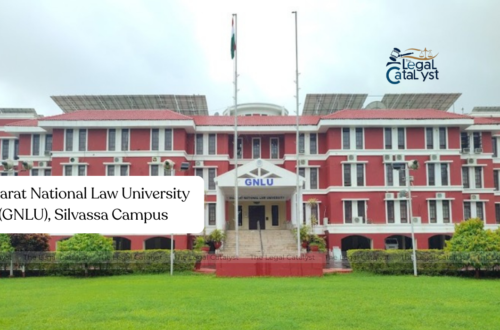

- Introduction and Institutional Identity
- Foundational Objective and Institutional Intent
- Location-Based Academic and Career Exposure
- Academic Structure and Teaching Methodology
- Academic Rigor and Evaluation Standards
- Fee Structure and Real Cost of Legal Education
- Internship Ecosystem and Practical Exposure
- Moot Court, Research, and Co-Curricular Culture
- Placements and Career Outcomes
- Alumni Network and Long-Term Value
- Campus Culture, Competition, and Student Well-Being
- Administration and Institutional Governance
- Suitability Analysis
- Who Should Avoid This Law School
- Comparative Positioning
- Final Verdict
- Overall Institutional Standing
- Core Strengths
- Structural Weaknesses
- Return on Investment (ROI) Assessment
- Consistency of Outcomes
- Final Legal Catalyst Take
Introduction and Institutional Identity
The West Bengal National University of Juridical Sciences (NUJS) was established in 1999 by an Act of the West Bengal Legislature. It is a public law university, located in Salt Lake City, Kolkata, West Bengal. The university is autonomous in nature and is recognized by the University Grants Commission (UGC) and approved by the Bar Council of India (BCI). Its official website is www.nujs.edu.
WBNUJS offers a five-year B.A., LL.B. (Hons.), an LL.M., doctoral programmes, and select certificate and executive courses. It is a first-generation National Law University and was conceived as a national-level institution with strong academic orientation.
Foundational Objective and Institutional Intent
WBNUJS was created to extend the national law university model to eastern India and to establish a research-driven, academically rigorous institution that could serve both professional and scholarly legal needs. Its founding emphasis was on intellectual depth, doctrinal clarity, and legal research, rather than purely placement-oriented training.
This intent has been partially preserved. NUJS continues to be academically inclined, particularly in public law, jurisprudence, and theoretical subjects. However, over time, the institution has struggled to balance academic ambition with professional outcomes. While the original vision of academic seriousness remains visible, institutional energy has fluctuated due to governance instability and inconsistent strategic direction.
Location-Based Academic and Career Exposure
Kolkata offers mixed advantages for legal education. As a major metropolitan city with a rich legal history, it hosts the Calcutta High Court, multiple tribunals, arbitration practices, and a large litigation community. Students interested in traditional litigation, appellate advocacy, or public law can find meaningful exposure.
However, Kolkata has a limited corporate legal ecosystem compared to Delhi, Mumbai, or Bengaluru. Top-tier law firms and in-house legal teams have a minimal presence. Semester-time corporate internships are rare, forcing students to rely heavily on vacation internships in other cities. While living costs are lower than most metros, geographic distance from India’s dominant corporate legal markets constrains professional exposure for the average student.
Also Read- NALSAR University of Law, Hyderabad
Academic Structure and Teaching Methodology
The B.A., LL.B. (Hons.) programme follows a conventional NLU structure, integrating humanities and social sciences with core law subjects. Teaching methodology includes lectures, seminars, reading-based discussions, research papers, and examinations.
Faculty composition is uneven but academically inclined. NUJS has historically attracted strong scholars in public law, jurisprudence, and international law. At the same time, faculty attrition, administrative disruptions, and reliance on visiting faculty have affected continuity. Teaching quality varies significantly across subjects. Academic seriousness exists, but pedagogical consistency does not.
Academic Rigor and Evaluation Standards
Attendance rules are formally prescribed and generally enforced. Evaluation typically includes mid-semester examinations, end-term examinations, research papers, presentations, and class participation.
Academic rigor is moderate to high, particularly in theory-heavy subjects. Grading is competitive, but assessment standards are not always transparent or uniform. Compared to some peer institutions, NUJS places greater emphasis on written analytical work, which benefits academically inclined students but may disadvantage those seeking skill-based evaluation. Formal academic mentoring is limited.
Fee Structure and Real Cost of Legal Education
Official tuition fees are approximately ₹2.5–2.7 lakh per year, subject to revision. Hostel and mess charges generally add ₹1.0–1.2 lakh annually. Personal expenses, books, and incidental costs in Kolkata are relatively moderate, averaging ₹70,000–1 lakh per year.
The total estimated cost of completing the five-year programme is approximately ₹21–25 lakh. While this is lower than many metropolitan NLUs, the return must be evaluated against average placement and career outcomes rather than institutional legacy.
Internship Ecosystem and Practical Exposure
Internship access is largely student-driven. Kolkata-based litigation internships are accessible during semesters, but exposure to high-value corporate or policy internships typically requires travel during vacations.
Alumni support exists but is informal and unevenly accessed. There is no structured institutional mechanism ensuring baseline internship quality for all students. As a result, practical exposure varies widely, with motivated students building strong profiles while others graduate with limited applied experience.
Moot Court, Research, and Co-Curricular Culture
NUJS has a strong historical reputation in moot court competitions and legal research. Several national and international moots have been part of the institution’s legacy, and research centres and journals exist across multiple domains.
In practice, participation and success are concentrated among a small segment of students. Research output and publication opportunities depend heavily on faculty availability and student initiative. Co-curricular culture exists but lacks systematic institutional nurturing for average students.
Also Read- National Law School of India University (NLSIU), Bengaluru
Placements and Career Outcomes
WBNUJS operates a centralized placement coordination committee. Corporate law firm recruitment occurs but is inconsistent and limited in scale. A small portion of the batch secures placements in top-tier firms.
For the majority of students, outcomes include litigation, mid-tier or regional law firms, policy research roles, higher studies, academia, judicial services preparation, or non-legal careers. Publicly available, granular data on median placements is limited, restricting precise assessment. What is evident is that NUJS does not deliver uniform professional outcomes across the batch.
Alumni Network and Long-Term Value
NUJS has a strong and visible alumni network, particularly in litigation, academia, public policy, and select corporate roles. Alumni engagement with students occurs through mentorship, internships, and informal guidance.
However, alumni access is not institutionalized. Students who actively network benefit disproportionately. The alumni brand adds long-term credibility but does not automatically translate into career security for average graduates.
Campus Culture, Competition, and Student Well-Being
The campus environment is academically oriented and relatively less commercially competitive. Peer quality is high, encouraging intellectual engagement.
At the same time, uncertainty about career outcomes and administrative instability contribute to stress. Mental health and counselling services exist but are limited in scale. Institutional culture emphasizes independence and intellectual rigor rather than structured emotional or professional support.
Administration and Institutional Governance
Administrative governance has been a persistent area of concern. Periods of leadership instability, slow decision-making, and communication gaps have affected institutional morale and continuity.
While formal governance structures exist, execution has often been reactive rather than strategic. Administrative inefficiency has had a direct impact on faculty retention, student experience, and long-term planning.
Suitability Analysis
WBNUJS is best suited for students interested in litigation, academia, public law, policy research, or higher studies, who value academic depth and are comfortable navigating career paths independently.
Who Should Avoid This Law School
Students seeking strong and predictable corporate placements, intensive professional training, or highly structured mentorship may find NUJS misaligned with their expectations. Those unwilling to tolerate administrative uncertainty should be cautious.
Comparative Positioning
Compared to National Law School of India University, NUJS offers stronger academic orientation but weaker placement consistency. In comparison with NALSAR University of Law, NUJS has comparable academic seriousness but inferior location-based professional exposure.
Final Verdict
WBNUJS Kolkata is an academically credible but institutionally inconsistent law school. It offers intellectual depth and long-term alumni value but does not reliably convert effort into strong professional outcomes for the average student. It is worth considering for students with clear academic or litigation-oriented goals. For those prioritizing predictable corporate careers, the cost-benefit equation is uncertain
Also Read- National Law University, Delhi (NLU-D)
The Legal Catalyst Review
Overall Institutional Standing
WBNUJS occupies a legacy-driven but fragile position within India’s legal education ecosystem. Its reputation is sustained by alumni and academic history rather than present institutional momentum.
Core Strengths
The institution’s strongest assets are its academic orientation, litigation-friendly location, and long-standing alumni presence in public law and academia.
Structural Weaknesses
Administrative instability, inconsistent faculty strength, limited corporate exposure, and uneven student support systems materially affect average outcomes.
Return on Investment (ROI) Assessment
ROI is variable and risk-weighted. For academically inclined or litigation-focused students, the investment can be justified. For the median student seeking professional security, returns are uncertain.
Consistency of Outcomes
Success at NUJS is largely student-dependent. The institution provides intellectual capital but limited structural leverage.
Final Legal Catalyst Take
WBNUJS delivers scholarship, not certainty. It rewards students who can translate academic capital into career outcomes independently. For others, the gap between institutional promise and practical payoff can be significant.
Connect with us on Instagram – X – LinkedIn for daily updates, quizzes, and other materials