- What the Union Budget of India Is
- Why the Union Budget Is Necessary
- Constitutional and Legal Basis of the Union Budget
- Who Prepares the Union Budget of India
- The Budget Preparation Process Explained Step by Step
- Types of Budgets Presented
- Date on Which the Union Budget Is Introduced
- What Happens After the Budget Is Presented
- Role of Parliament in the Budget Process
- Importance of the Union Budget for Citizens
- Authentic Government Resources for Verification
The Union Budget of India is one of the most significant annual policy documents of the Government of India. It is not merely a financial statement but a comprehensive reflection of the government’s economic priorities, fiscal discipline, and developmental agenda for a given financial year. For citizens, businesses, investors, and policymakers alike, the Union Budget plays a decisive role in shaping taxation, public spending, welfare schemes, infrastructure development, and macroeconomic stability.
Despite its importance, the concept of the Union Budget often appears complex to first-time readers. This article explains the Union Budget of India from the ground up. It answers what the Union Budget is, why it exists, who prepares it, how it is produced, the constitutional basis behind it, the stages of its formulation and approval, and the date on which it is introduced in Parliament. The objective is to provide a complete and accurate understanding so that the reader does not need to consult any other source.
What the Union Budget of India Is
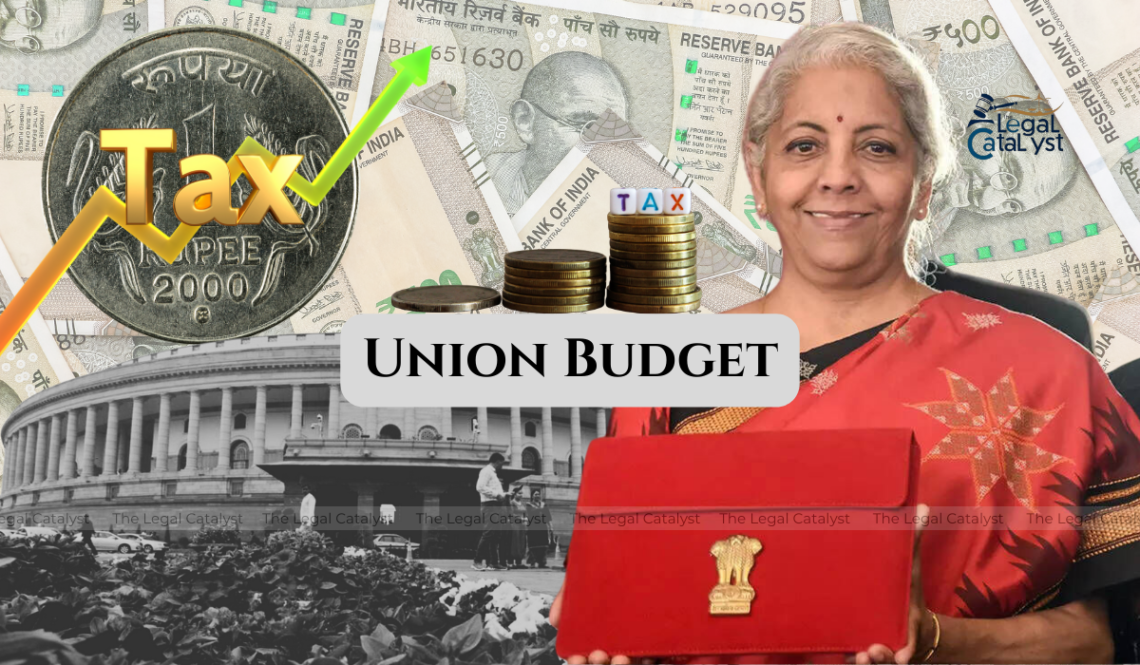
The Union Budget of India is the annual financial statement of the Government of India presented for a specific financial year, which runs from 1 April to 31 March. It provides a detailed account of the government’s estimated receipts and expenditures for the upcoming year, along with revised estimates for the current year.
In simple terms, the Union Budget answers three fundamental questions. How much money the government expects to earn. How much money the government plans to spend. How the difference between income and expenditure will be managed.
The budget includes all sources of government revenue such as taxes, non-tax income, borrowings, and capital receipts. It also outlines expenditure on defence, education, healthcare, infrastructure, social welfare schemes, subsidies, interest payments, and administrative costs.
Under Article 112 of the Constitution of India, the Union Budget is formally referred to as the Annual Financial Statement. This constitutional requirement makes the budget a legal and mandatory exercise, not a discretionary policy choice.
Why the Union Budget Is Necessary
The Union Budget is essential for democratic governance and financial accountability. Without parliamentary approval of the budget, the government cannot lawfully spend public money or collect taxes.
The budget serves multiple purposes simultaneously. It acts as a financial plan for governance. It communicates the government’s economic vision to Parliament and the public. It ensures legislative oversight over executive spending. It provides predictability to markets and institutions. It allocates national resources across competing priorities.
For citizens, the Union Budget influences income tax rates, indirect taxes, prices of essential goods, availability of public services, employment generation, and welfare benefits. For states, it determines tax devolution and grants. For businesses, it affects compliance costs, incentives, and investment climate.
Constitutional and Legal Basis of the Union Budget
The Union Budget derives its authority directly from the Constitution of India. Several constitutional provisions govern its preparation, presentation, and approval.
Article 112 mandates the presentation of the Annual Financial Statement before both Houses of Parliament. Article 113 requires that expenditure charged on the Consolidated Fund of India be distinguished from other expenditures. Article 114 provides that no money can be withdrawn from the Consolidated Fund of India without parliamentary approval. Article 265 establishes that no tax shall be levied or collected except by authority of law.
The budget also operates within the framework of the Fiscal Responsibility and Budget Management Act, 2003, which seeks to ensure fiscal discipline, transparency, and long-term macroeconomic stability.
Who Prepares the Union Budget of India
The Union Budget is prepared by the Ministry of Finance, Government of India. Within the Ministry of Finance, the primary responsibility lies with the Department of Economic Affairs, particularly its Budget Division.
The Finance Minister is the political head responsible for the budget. However, the preparation is a collective institutional exercise involving economists, civil servants, financial advisors, and technical experts.
Several ministries and departments submit their expenditure estimates and funding requirements to the Ministry of Finance. These proposals are scrutinised, negotiated, and prioritised based on fiscal capacity, policy objectives, and macroeconomic conditions.
The budget is not prepared in isolation. Inputs are taken from multiple stakeholders, including state governments, industry associations, economists, and regulatory bodies. However, the final decisions rest with the Union Cabinet, chaired by the Prime Minister.
The Budget Preparation Process Explained Step by Step
The process of preparing the Union Budget typically begins around six to eight months before its presentation.
The first stage involves the issuance of budget circulars by the Ministry of Finance to all central ministries and departments. These circulars specify timelines and guidelines for submitting expenditure estimates and performance reports.
The second stage involves detailed discussions between the Ministry of Finance and individual ministries. During these meetings, proposed expenditures are examined in light of revenue projections, fiscal deficit targets, and national priorities.
The third stage focuses on revenue estimation. Tax authorities such as the Central Board of Direct Taxes and the Central Board of Indirect Taxes and Customs provide projections for direct and indirect tax collections. Non-tax revenue estimates are also prepared.
The fourth stage is policy formulation. This includes decisions on tax rates, exemptions, subsidies, welfare schemes, and capital expenditure. Macroeconomic indicators such as GDP growth, inflation, and borrowing capacity play a crucial role at this stage.
The fifth stage involves consolidation and finalisation. Once the Finance Minister approves the proposals, the budget documents are prepared, vetted, and approved by the Union Cabinet shortly before presentation.
All budget documents are treated as confidential until the official presentation in Parliament.
Types of Budgets Presented
The Union Budget is not a single document but a collection of multiple statements.
The General Budget covers the overall receipts and expenditures of the Union Government. The Capital Budget deals with capital receipts and capital expenditure, including loans, disinvestment, and asset creation. The Revenue Budget focuses on revenue receipts and revenue expenditure.
Additionally, separate documents such as the Expenditure Budget, Receipts Budget, Finance Bill, and Budget at a Glance are presented to provide clarity and transparency.
Date on Which the Union Budget Is Introduced
The Union Budget of India is introduced annually on 1 February.
Prior to 2017, the budget was traditionally presented on the last working day of February. This practice was changed to allow earlier implementation of budgetary proposals from the start of the financial year on 1 April.
The budget is presented in the Lok Sabha by the Finance Minister. It is followed by the laying of budget documents in the Rajya Sabha. While the Rajya Sabha cannot vote on demands for grants, it plays an important deliberative role.
What Happens After the Budget Is Presented
Presentation of the budget is only the beginning of the parliamentary process.
After the speech, a general discussion on the budget takes place in both Houses of Parliament. This is followed by scrutiny of expenditure demands by Departmentally Related Standing Committees.
The Finance Bill, which contains taxation proposals, must be passed by Parliament. Demands for grants are voted upon in the Lok Sabha. Once approved, the Appropriation Bill authorises withdrawal of funds from the Consolidated Fund of India.
Only after these legislative steps are completed can the government legally implement budget proposals.
Role of Parliament in the Budget Process
Parliament plays a central role in ensuring democratic accountability in the budget process. The Parliament of India examines, debates, modifies, and approves the budget.
The Lok Sabha holds primary financial authority, reflecting the principle that taxation and expenditure must be approved by elected representatives. The Rajya Sabha provides review and discussion, contributing to federal balance and expertise.
This parliamentary control ensures that public money is spent only with legislative consent.
Importance of the Union Budget for Citizens
For ordinary citizens, the Union Budget affects daily life in tangible ways. It influences income tax slabs, GST rates, fuel prices, subsidies, social welfare schemes, healthcare funding, education spending, and employment programs.
The budget also signals long-term policy direction, such as focus on infrastructure, manufacturing, digital economy, or social security. Understanding the budget empowers citizens to engage meaningfully with public policy and governance.
Authentic Government Resources for Verification
For readers seeking official verification and primary sources, the following Government of India websites provide authoritative information.
The Union Budget portal of the Ministry of Finance at indiabudget.gov.in hosts all budget documents, speeches, and explanatory notes.
The Ministry of Finance website at finmin.gov.in provides policy background, press releases, and fiscal data.
The official Parliament of India website at parliamentofindia.nic.in explains legislative procedures related to budget approval.
Explore- UGC’s New Anti-Discrimination Rules: What Changed, What Didn’t, and Why the Debate Matters
The Union Budget of India is a constitutionally mandated, institutionally complex, and democratically accountable financial exercise. It reflects not only numbers but national priorities, policy choices, and governance philosophy. Understanding how the budget is prepared, who prepares it, when it is introduced, and how it is approved allows citizens to engage with the economic life of the country in an informed manner.
Far from being an abstract financial document, the Union Budget is a practical instrument that shapes the everyday realities of governance and development in India.
Connect with us on Instagram – X – LinkedIn to get early access to our study material