- Introduction and Institutional Identity
- Foundational Objective and Institutional Evolution
- Location-Based Academic and Career Exposure
- Courses Offered and Entry Pathways
- Academic Structure and Teaching Reality
- Academic Rigor and Evaluation Standards
- Fee Structure and True Cost of Education
- Internship Ecosystem and Practical Exposure
- Moot Court, Research, and Co-Curricular Opportunities
- Placements and Career Outcomes
- Alumni Network and Long-Term Value
- Campus Culture and Student Experience
- Administration and Institutional Governance
- Multi-Campus or Branch Structure
- Suitability Analysis
- Who Should Avoid This University
- Comparative Positioning
- Final Verdict
Introduction and Institutional Identity
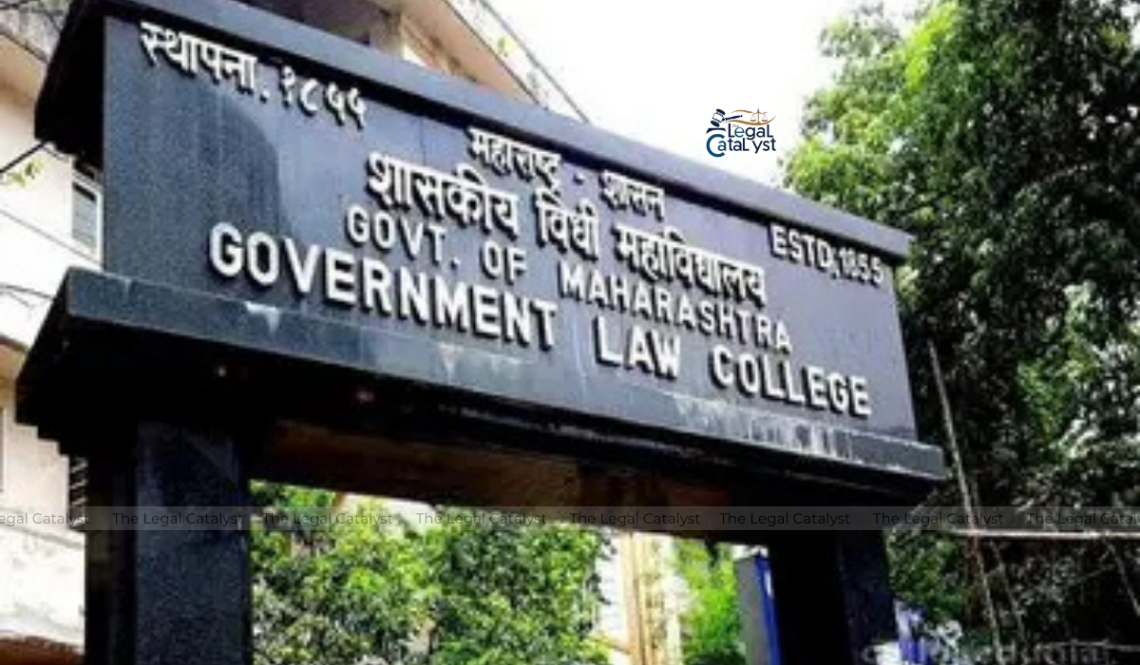
Government Law College (GLC) is one of India’s oldest and most historically significant law institutions. Established in 1855, it functions as a constituent college affiliated with University of Mumbai. GLC is a public law college operating under a state university framework rather than as an autonomous or residential law university.
The college is located in South Mumbai, Maharashtra, close to the city’s historic legal and administrative district. It is recognised by the University Grants Commission through the University of Mumbai and approved by the Bar Council of India, enabling its graduates to enrol as advocates. The official website of the college is glcmumbai.com.
GLC is a Non-NLU law institution that predates the National Law University system by more than a century. It must therefore be evaluated not on legacy alone, but on how effectively it serves present-day legal education needs, average student outcomes, and practical exposure in comparison with NLUs.
Foundational Objective and Institutional Evolution
Government Law College was established during the British colonial period with the primary objective of training legal professionals for courts, administration, and public service in western India. Its early curriculum was closely aligned with courtroom practice and statutory interpretation, producing advocates, judges, and administrators who shaped the Bombay Presidency’s legal system.
Post-independence, GLC continued as a publicly funded institution under the University of Mumbai. Unlike NLUs, which were conceived as reformist institutions with residential campuses, integrated curricula, and centralised placement systems, GLC evolved incrementally within a traditional university model. The introduction of the five-year integrated law programme and postgraduate courses reflects adaptation to national legal education reforms, but the core academic structure remains conservative and examination-oriented.
Explore- Faculty of Law, University of Lucknow (LU), Lucknow, Uttar Pradesh
Location-Based Academic and Career Exposure
Mumbai is India’s most significant legal and commercial hub, and GLC’s location is its strongest structural advantage.
Advantages
The college is situated close to the Bombay High Court, city civil courts, magistrate courts, tribunals, and arbitration centres. Mumbai is also home to the headquarters of most major Indian law firms, corporate legal departments, financial institutions, regulatory bodies, and multinational companies.
Students have access to unparalleled litigation exposure, corporate internships, arbitration practice, and in-house legal roles. Semester-time internships are realistically possible for motivated students due to proximity and flexible academic schedules.
Limitations
The location advantage is not institutionally structured. There is no formal mechanism linking coursework with internships or court exposure. Competition for quality opportunities in Mumbai is intense, and students without initiative or networking skills often fail to capitalise on the city’s ecosystem.
Courses Offered and Entry Pathways
| Programme | Duration | Entry Pathway |
|---|---|---|
| B.A. LL.B. | 5 years | MH CET Law |
| LL.B. | 3 years | MH CET Law |
| LL.M. | 2 years | University-level admission process |
| Ph.D. (Law) | Variable | University-level admission process |
Admissions to undergraduate programmes are conducted through the Maharashtra Common Entrance Test for Law. Entry is highly competitive, particularly for the five-year programme, and the student quality at intake is generally strong.
Academic Structure and Teaching Reality
Teaching at GLC is predominantly lecture-based. Faculty composition includes senior professors with strong doctrinal expertise, mid-career academics, and visiting faculty drawn from legal practice. Several faculty members are respected for their subject mastery, particularly in constitutional law, criminal law, and procedural subjects.
Classroom seriousness varies. The academic environment assumes a high degree of student independence. Attendance is not strictly enforced, and classroom participation depends largely on individual motivation. There is limited use of simulations, drafting workshops, or structured skills training within the formal curriculum.
Academic Rigor and Evaluation Standards
Attendance requirements exist formally but are leniently enforced. This provides flexibility for internships but can reduce classroom engagement for less disciplined students.
Internal assessments carry limited weight. End-semester or annual examinations dominate evaluation. The grading culture is conservative, with limited grade inflation. High distinctions are achievable but require strong doctrinal understanding and exam preparation. Feedback and academic mentoring are largely informal.
Fee Structure and True Cost of Education
| Cost Component | Approximate Amount (INR) |
|---|---|
| Annual Tuition Fees | 40,000–60,000 |
| Hostel and Living (Annual) | 1.5–2.5 lakhs |
| Estimated Total Course Cost (5 years) | 8–14 lakhs |
| Estimated Total Course Cost (3 years) | 4–6 lakhs |
GLC offers one of the lowest tuition costs among elite law institutions in India. However, living expenses in Mumbai are high and form the largest component of total cost.
Internship Ecosystem and Practical Exposure
Internships are entirely student-driven but strongly supported by location and alumni networks. Students commonly intern with senior advocates at the Bombay High Court, law firms in Mumbai, corporate legal departments, arbitration chambers, and regulatory bodies.
Litigation exposure is particularly strong and continuous. Corporate and transactional internships are accessible to students who proactively network and perform academically. There is no formal internship allocation system.
Moot Court, Research, and Co-Curricular Opportunities
Mooting culture exists but is not institutionally dominant. Participation depends on student initiative rather than structured faculty mentorship. GLC has a history of strong mooting performance, but it lacks the systematic training frameworks seen in top NLUs.
Research opportunities exist through journals, seminars, and faculty-led initiatives, but undergraduate research mentoring is inconsistent. ADR exposure is largely theoretical, with limited practical integration.
Placements and Career Outcomes
GLC does not maintain a formal, centralised placement cell comparable to NLUs or private universities. Consolidated placement data is not publicly available.
Average outcomes include litigation practice, placements in top-tier and mid-tier law firms, in-house legal roles, and preparation for judicial services or civil services. While GLC consistently produces graduates who reach elite law firms and senior litigation roles, these outcomes represent a minority. For most students, career outcomes depend on internships, networking, and long-term effort rather than immediate campus recruitment.\
Explore-Faculty of Law, Banaras Hindu University (BHU), Varanasi, Uttar Pradesh
Alumni Network and Long-Term Value
GLC has one of the strongest alumni networks in Indian legal education. Alumni include judges of the Supreme Court and High Courts, senior advocates, leading law firm partners, politicians, and senior public servants.
Alumni engagement is informal but powerful, particularly in Mumbai’s litigation and corporate circles. Long-term career value is high, but benefits accrue gradually rather than immediately after graduation.
Campus Culture and Student Experience
Campus culture is highly independent and unstructured. Peer quality is generally strong, particularly in the five-year programme. Competition exists but is largely self-driven rather than institutionally enforced.
Student support systems such as counselling and career guidance are limited. The environment suits mature, self-motivated students but may feel overwhelming or directionless to others.
Administration and Institutional Governance
Administrative functioning reflects a typical public university model. Processes can be slow, and communication is not proactive. However, academic autonomy at the college level is relatively high.
Grievance redressal mechanisms exist but are procedural. Students are expected to navigate administrative systems independently.
Multi-Campus or Branch Structure
Government Law College operates from a single campus in Mumbai. There are no branch campuses offering law programmes. Admissions, academics, and administration are conducted from this single location.
Suitability Analysis
GLC is best suited for highly self-driven, academically capable students who wish to leverage Mumbai’s legal ecosystem for litigation, corporate law, or arbitration. Cost-conscious students seeking elite exposure without private university fees benefit significantly.
Who Should Avoid This University
Students seeking structured placements, strict academic monitoring, continuous mentoring, or residential campus life may struggle. Those unable to manage the high cost of living in Mumbai or navigate unstructured systems independently should reconsider.
Comparative Positioning
Compared to ILS Law College Pune, GLC offers stronger corporate exposure but higher living costs. Compared to Symbiosis Law School Pune, GLC provides lower cost and stronger alumni leverage but weaker institutional support. While it does not offer the structured systems of top NLUs, it competes strongly on exposure, legacy, and long-term career potential.
Explore- Faculty of Law, Jamia Millia Islamia (JMI)
Final Verdict
Government Law College, Mumbai, is a legacy public law institution with unmatched access to India’s most powerful legal ecosystem. It offers minimal institutional hand-holding, conservative academics, and no guaranteed placements, placing responsibility squarely on the student. For disciplined, independent students capable of leveraging Mumbai’s opportunities, GLC can outperform many NLUs in long-term career outcomes. For students seeking structure, predictability, or institutional support, expectations must be carefully calibrated.
Connect with us on Instagram – X – LinkedIn for daily updates, quizzes, and other materials