
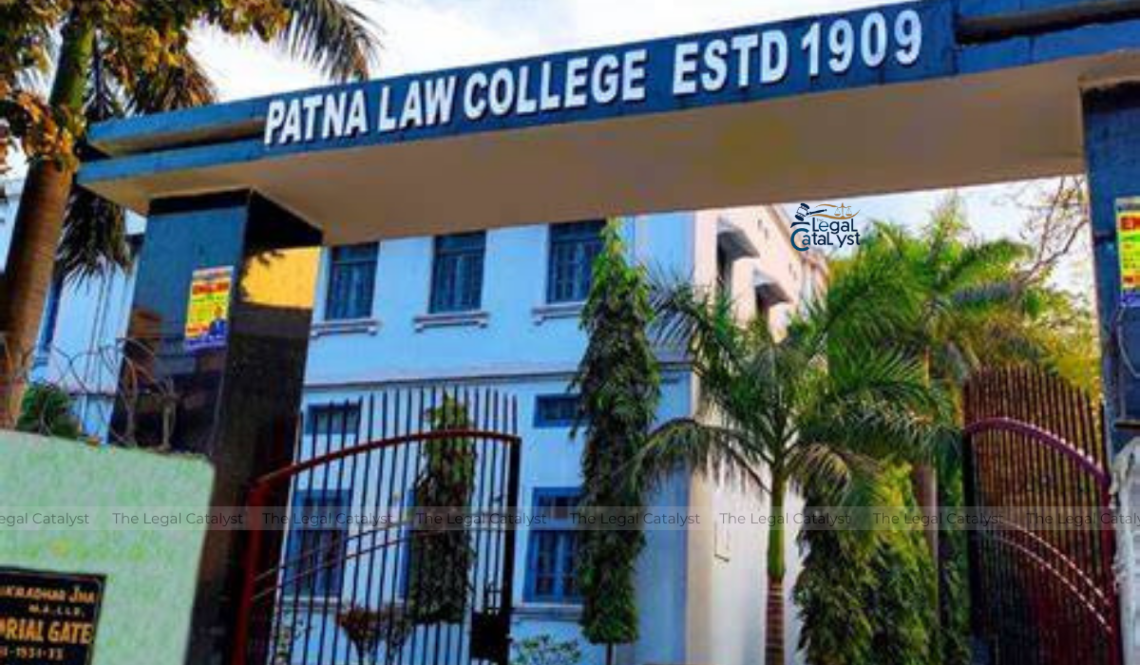
- Introduction and Institutional Identity
- Foundational Objective and Institutional Evolution
- Location-Based Academic and Career Exposure
- Courses Offered and Entry Pathways
- Academic Structure and Teaching Reality
- Academic Rigor and Evaluation Standards
- Fee Structure and True Cost of Education
- Internship Ecosystem and Practical Exposure
- Moot Court, Research, and Co-Curricular Opportunities
- Placements and Career Outcomes
- Alumni Network and Long-Term Value
- Campus Culture and Student Experience
- Administration and Institutional Governance
- Multi-Campus or Branch Structure
- Suitability Analysis
- Who Should Avoid This University
- Comparative Positioning
- Final Verdict
Introduction and Institutional Identity
Patna Law College is a constituent college of Patna University, one of the oldest public universities in India, established in 1917. Patna Law College itself was established in 1909, making it among the earliest institutions for formal legal education in the country. It functions as a traditional public law college within a state university system rather than as an autonomous or specialised law school.
The college is located in Patna, Bihar, and operates under the academic and administrative framework of Patna University. It is recognised by the University Grants Commission, and its law programmes are approved by the Bar Council of India, enabling graduates to enrol as advocates.
As a Non-NLU law institution, Patna Law College represents a legacy model of legal education characterised by low fees, large batches, limited institutional support, and strong historical association with litigation and public service. It must therefore be evaluated on actual academic delivery, exposure, and average student outcomes rather than reputation or historical legacy alone.
Foundational Objective and Institutional Evolution
Patna Law College was established during the colonial period with the objective of training lawyers for courts and public administration in eastern India. Its early role was closely tied to the development of the legal profession in Bihar and neighbouring regions, producing advocates, judges, and public officials.
Over time, the institution became integrated into the Patna University system, expanding its intake and programmes to meet regional demand for legal education. Unlike National Law Universities, which were conceived as reform-oriented institutions with residential campuses, integrated curricula, and continuous assessment, Patna Law College evolved incrementally within a conventional university framework. Its academic structure remains rooted in doctrinal instruction and end-semester examinations, with limited emphasis on skills training or institutional career facilitation.
Explore- Faculty of Law, University of Lucknow (LU), Lucknow, Uttar Pradesh
Location-Based Academic and Career Exposure
Patna is the administrative capital of Bihar and offers a litigation-oriented legal environment.
Advantages
The city hosts the Patna High Court, district courts, tribunals, and various quasi-judicial bodies. This provides meaningful exposure to constitutional litigation, civil and criminal practice, and government-related legal work. Students interested in litigation, judicial services, and public sector careers benefit from proximity to active courts and practicing advocates.
Limitations
Patna has minimal corporate legal presence. National law firms, in-house corporate legal teams, arbitration centres, and policy institutions are limited. Exposure to corporate law, international practice, or regulatory consulting generally requires relocation to cities such as Delhi, Mumbai, or Bengaluru. Semester-time corporate internships are uncommon.
Courses Offered and Entry Pathways
| Programme | Duration | Entry Pathway |
|---|---|---|
| B.A. LL.B. | 5 years | University-level entrance test |
| LL.B. | 3 years | University-level entrance test |
| LL.M. | 2 years | University-level admission process |
| Ph.D. (Law) | Variable | University-level admission process |
Admissions are conducted through Patna University’s entrance examinations. Publicly available data on cut-offs and intake competitiveness is limited. Batch sizes are large, resulting in wide variation in academic preparedness and motivation among students.
Academic Structure and Teaching Reality
Teaching at Patna Law College is predominantly lecture-based. Class sizes are substantial, particularly in the three-year LL.B. programme. Faculty composition includes a small number of senior professors with strong doctrinal grounding, supported by associate professors, assistant professors, and guest or contractual faculty.
Classroom seriousness varies significantly. Some faculty members maintain rigorous doctrinal standards, while others focus narrowly on examination-oriented teaching. Interactive pedagogy, case simulations, and skills-based exercises are limited. Students aiming for professional competence must rely heavily on self-study, court exposure, and external resources.
Academic Rigor and Evaluation Standards
Attendance requirements exist formally but enforcement is inconsistent. Internal assessments are limited in scope and often carry lower weightage than end-semester examinations.
End-semester examinations dominate evaluation. The grading culture is conservative, with limited grade inflation. High distinctions are uncommon, and most students fall within average grade bands. Feedback mechanisms are minimal, and structured academic mentoring is largely absent. Academic outcomes depend more on individual discipline than institutional design.
Fee Structure and True Cost of Education
| Cost Component | Approximate Amount (INR) |
|---|---|
| Annual Tuition Fees | 2,000–5,000 |
| Hostel and Living (Annual) | 50,000–1,00,000 |
| Estimated Total Course Cost (5 years) | 2–5 lakhs |
| Estimated Total Course Cost (3 years) | 1.5–3 lakhs |
Patna Law College is among the lowest-cost law education options in India. However, low fees correspond with limited infrastructure investment, outdated facilities, and minimal institutional career support.
Internship Ecosystem and Practical Exposure
Internships are entirely student-driven. Many students intern with advocates practicing at the Patna High Court or district courts, offering exposure to litigation, drafting, and court procedure. Semester-time court internships are feasible due to proximity.
Corporate, policy, or research internships are rare locally and usually pursued during vacations in other cities. Clinical legal education exists primarily on paper, with limited structured supervision or integration into academic credit.
Moot Court, Research, and Co-Curricular Opportunities
Moot court activities exist but are not central to institutional culture. Participation depends largely on student initiative rather than faculty-driven programmes. Exposure to ADR, negotiation, or mediation is largely theoretical.
Research centres and law journals exist nominally under the university framework, but undergraduate research mentoring is inconsistent. Publication opportunities depend on individual faculty interest rather than systematic institutional support.
Placements and Career Outcomes
There is no centralised placement cell with publicly available data. Placement mechanisms are informal and largely absent.
For the majority of students, career outcomes include litigation practice in Bihar and neighbouring states, preparation for judicial services or other government examinations, higher studies, or transition into non-legal employment. Corporate law firm placements and national-level roles are rare and not representative of average outcomes.
Explore- Faculty of Law, University of Allahabad, Prayagraj, Uttar Pradesh
Alumni Network and Long-Term Value
Patna Law College has a historically significant alumni base, including advocates, judges, politicians, and public servants. Alumni presence in litigation and public service is strong, particularly within Bihar.
However, alumni engagement with current students is informal and decentralised. Networking benefits accrue slowly and depend heavily on personal outreach rather than institutional facilitation. Long-term value is realised primarily through litigation practice and public service rather than immediate post-graduation outcomes.
Campus Culture and Student Experience
The campus environment is largely non-residential and academically fragmented. Peer quality varies widely due to diverse entry pathways and large batch sizes. Competition exists but is primarily exam-oriented rather than skill-driven.
Student support systems such as career counselling, mentoring, and mental health services are minimal. Student societies operate with limited funding and administrative backing.
Administration and Institutional Governance
Administrative functioning reflects a typical state public university structure. Delays in examinations, result declarations, and documentation are common. Communication between administration and students is limited, affecting planning for internships and further studies. Grievance redressal mechanisms exist but are slow and procedural.
Multi-Campus or Branch Structure
Patna Law College operates from a single campus under Patna University. There are no branch campuses offering law programmes under this college. Admissions, academics, and administration are centralised within the Patna University system.
Suitability Analysis
Patna Law College is best suited for students who are highly cost-sensitive, intend to practise litigation in Bihar or nearby regions, or plan to prepare for judicial services or government examinations alongside their studies. Students who are self-directed and able to compensate for institutional limitations may extract value from the programme.
Who Should Avoid This University
Students seeking structured corporate placements, modern pedagogical methods, strong research mentorship, or national-level exposure are likely to find the institution limiting. Those uncomfortable with administrative delays, minimal infrastructure, or lack of institutional support may struggle.
Comparative Positioning
Compared to the Faculty of Law, University of Allahabad, Patna Law College offers similar litigation orientation but weaker High Court exposure in terms of national prominence. Compared to Government Law College Mumbai, it is significantly cheaper but lacks metropolitan exposure and institutional structure. It does not compete with NLUs in placements, infrastructure, or skills training and functions primarily as a regional litigation-focused institution.
Explore- Faculty of Law, Deen Dayal Upadhyaya Gorakhpur University (DDUGU), Uttar Pradesh
Final Verdict
Patna Law College, Patna University, is a legacy public law institution offering extremely low-cost legal education with strong access to local litigation and public service pathways. It provides minimal institutional support, limited academic innovation, and weak placement facilitation. For disciplined students focused on courtroom practice or government examinations and willing to navigate a traditional, resource-constrained environment, it can offer functional value. For students seeking modern legal training, structured career outcomes, or national exposure, the return on time and effort is likely to be limited.
Connect with us on Instagram – X – LinkedIn for daily updates, quizzes, and other materials