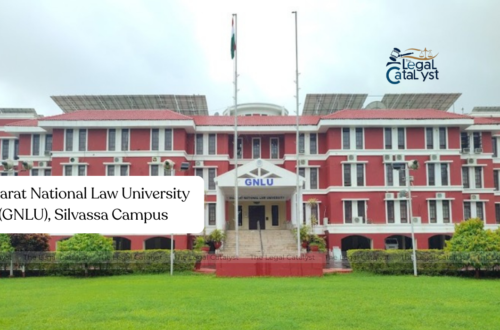

- Introduction and Institutional Identity
- Foundational Objective and Institutional Intent
- Location-Based Academic and Career Exposure
- Academic Structure and Teaching Methodology
- Academic Rigor and Evaluation Standards
- Fee Structure and Real Cost of Legal Education
- Internship Ecosystem and Practical Exposure
- Moot Court, Research, and Co-Curricular Culture
- Placements and Career Outcomes
- Alumni Network and Long-Term Value
- Campus Culture, Competition, and Student Well-Being
- Administration and Institutional Governance
- Suitability Analysis
- Who Should Avoid This Law School
- Comparative Positioning
- Final Verdict
- Overall Institutional Standing
- Core Strengths
- Structural Weaknesses
- Return on Investment (ROI) Assessment
- Consistency of Outcomes
- Final Legal Catalyst Take
Introduction and Institutional Identity
National Law University, Jodhpur (NLUJ) was established in 1999 by an Act of the Rajasthan State Legislature. It is a public law university, located on the outskirts of Jodhpur, Rajasthan. The institution functions as an autonomous university and is recognized by the University Grants Commission (UGC) and approved by the Bar Council of India (BCI). Its official website is www.nlujodhpur.ac.in.
NLUJ offers a five-year B.A., LL.B. (Hons.), an LL.M., doctoral programmes, and limited executive and certificate courses. It is a first-generation National Law University and was conceived as a nationally competitive institution with strong professional orientation.
Foundational Objective and Institutional Intent
NLUJ was created to extend the national law university model to western India and to produce professionally competent graduates for corporate law, litigation, and public service. Unlike some contemporaries that emphasized academic theory, NLUJ’s founding intent leaned toward practice-oriented legal education, particularly corporate law and commercial practice.
This intent has been largely preserved. The institution has consistently prioritized professional readiness and placement outcomes. However, this focus has come at the cost of deeper academic and research development. NLUJ today aligns with its original professional objective, but it does so by narrowing institutional breadth rather than expanding holistic legal education.
Location-Based Academic and Career Exposure
Jodhpur presents significant structural disadvantages in terms of legal exposure. It is geographically distant from major commercial, policy, and litigation hubs. There is minimal local presence of national law firms, corporate legal teams, or policy institutions.
As a result, semester-time internships of professional value are rare. Students rely almost entirely on vacation internships in Delhi, Mumbai, Bengaluru, or other metros. The relative isolation does reduce distractions and living costs, but it places a heavy burden on students to independently secure exposure. Location neutrality works only for highly motivated students; for the average student, it is a constraint.
Academic Structure and Teaching Methodology
The B.A., LL.B. (Hons.) programme follows the standard NLU structure with social science subjects in the initial years and core law subjects in later semesters. Teaching is largely lecture-driven, supplemented by presentations, projects, and examinations.
Faculty composition has been inconsistent over time. While there are competent faculty members in certain subjects, faculty turnover and gaps in senior academic leadership have affected continuity. Teaching quality varies significantly. Academic seriousness exists, but the institution’s culture places greater emphasis on placements than on classroom intellectual depth. Students inclined toward theoretical or research-heavy learning often find limited institutional encouragement.
Also Read- National Law Institute University (NLIU), Bhopal
Academic Rigor and Evaluation Standards
Attendance requirements are formally prescribed and generally enforced. Evaluation methods include mid-semester exams, end-term exams, projects, and class participation.
Academic rigor is moderate. Grading is not as strict or competitive as in some peer institutions, and assessment standards can be uneven across courses. This reduces academic pressure but also weakens academic differentiation. Feedback mechanisms are limited, and structured academic mentoring is minimal.
Fee Structure and Real Cost of Legal Education
Official tuition fees are approximately ₹2.6–2.8 lakh per year. Hostel and mess charges add around ₹1.0–1.2 lakh annually. Living expenses in Jodhpur are relatively low, with personal and incidental costs averaging ₹50,000–70,000 per year.
The total estimated cost of completing the five-year programme is approximately ₹20–24 lakh. While more affordable than some metropolitan NLUs, the financial assessment must consider the variability of outcomes for non-top performers.
Internship Ecosystem and Practical Exposure
Internship access is almost entirely student-driven. The university’s location offers limited local opportunities, making external internships essential. Alumni support exists, particularly in corporate law, but it is informal and accessed unevenly.
Students who are proactive and strategically focused can build strong internship profiles. However, a substantial portion of students graduate with uneven or shallow practical exposure. There is no institutional system ensuring minimum-quality internships for all students.
Moot Court, Research, and Co-Curricular Culture
NLUJ has participated in moot court competitions and ADR events, but its moot culture is not institutionally dominant. Participation tends to be limited to a small subset of students.
Research centres and journals exist, but output and engagement are inconsistent. The institution does not strongly incentivize academic research or publication. Co-curricular activities are present but lack sustained institutional investment. Overall, co-curricular culture is functional rather than vibrant.
Placements and Career Outcomes
NLUJ’s strongest institutional asset is its placement focus. The university maintains an active placement coordination committee, and corporate law firms regularly recruit from the campus.
That said, outcomes are unevenly distributed. A limited segment of the batch secures placements in top-tier firms. The majority enter mid-tier firms, litigation, corporate compliance roles, or pursue higher studies. Publicly available, detailed data on median placements is limited, making objective assessment difficult. The placement system benefits strategically positioned students far more than the average cohort member.
Alumni Network and Long-Term Value
NLUJ has developed a credible alumni network, particularly in corporate law firms and in-house roles. Alumni engagement exists through internships, mentorship, and placement support.
However, alumni access is not institutionalized. Students who network actively benefit disproportionately. Long-term brand value is respectable but does not independently secure career advancement without continued effort.
Campus Culture, Competition, and Student Well-Being
Campus life is relatively insular due to location. Peer competition is moderate, with strong focus on placements rather than academics. This can be motivating for career-focused students but limiting for those seeking broader intellectual engagement.
Mental health and counselling infrastructure is limited. Institutional culture emphasizes self-management and endurance. Students who struggle academically or professionally may find limited institutional support.
Also Read- National Law University, Delhi (NLU-D)
Administration and Institutional Governance
Administrative functioning is procedural and slow. Communication gaps, delays, and rigid processes are common. While the institution is not administratively dysfunctional, governance lacks agility and responsiveness.
Faculty recruitment, academic planning, and student grievance redressal suffer from bureaucratic inertia. Governance issues, while not crippling, consistently constrain institutional development.
Suitability Analysis
NLUJ is best suited for students targeting corporate law and firm placements, who are self-driven, comfortable with geographic isolation, and willing to independently secure internships and exposure.
Who Should Avoid This Law School
Students interested in academia, public law research, policy work, or litigation with early exposure may find NLUJ restrictive. Those expecting strong academic mentorship or vibrant intellectual culture are likely to be dissatisfied.
Comparative Positioning
Compared to National Law School of India University, NLUJ offers weaker academics and alumni depth but a clearer placement orientation. In comparison with NALSAR University of Law, NLUJ is more placement-focused but significantly weaker in academic and research output.
Final Verdict
NLUJ Jodhpur is a professionally oriented but academically narrow law school. It can deliver value to students with clear corporate ambitions and strong self-direction. For the average student without early clarity or initiative, the combination of location constraints and uneven institutional support can dilute returns. It is worth considering with realistic expectations, not institutional assumptions.
Also Read- The West Bengal National University of Juridical Sciences (NUJS), Kolkata
The Legal Catalyst Review
Overall Institutional Standing
NLUJ occupies a placement-centric middle tier within India’s legal education ecosystem. Its reputation is driven more by select corporate outcomes than by institutional breadth or academic leadership.
Core Strengths
The institution’s primary strengths are its sustained corporate law focus, a functional placement mechanism, and a growing alumni presence in firms and in-house roles.
Structural Weaknesses
Geographic isolation, limited academic depth, inconsistent faculty strength, and weak research culture materially affect the average student experience.
Return on Investment (ROI) Assessment
ROI is selectively positive. Students who secure firm placements can justify the investment. For the median student, outcomes often do not proportionately reflect the time and financial cost without exceptional personal effort.
Consistency of Outcomes
Success at NLUJ is highly student-dependent. Institutional structures amplify strong performers but do little to uplift average ones.
Final Legal Catalyst Take
NLUJ delivers access to corporate placements, not comprehensive legal education. It works for focused, outcome-driven students. It does not deliver predictable value for those relying on institutional depth to shape their careers.
Connect with us on Instagram – X – LinkedIn for daily updates, quizzes, and other materials